Solar panel technology has evolved significantly, driven by the demand for clean, renewable energy. Here are the major types and advancements in solar panel technologies:Sample text. Click to select the Text Element.
1.Crystalline Silicon Solar PanelsSample Headline
These are the most widely used solar panels due to their efficiency and durability. They come in two main types:
Monocrystalline Solar Panels: Made from single-crystal silicon, they offer high efficiency (15–25%) and perform well in low-light conditions.
Polycrystalline Solar Panels: Made from multiple silicon fragments melted together, they are slightly less efficient (13–20%) but more affordable.
2.Thin-Film Solar Panels
These panels are made by depositing thin layers of photovoltaic material on a substrate. Types include:
Amorphous Silicon (a-Si): Flexible and lightweight, often used in small devices or portable applications.
Cadmium Telluride (CdTe): Affordable and efficient but raises environmental concerns due to cadmium.
Copper Indium Gallium Selenide (CIGS): Offers high efficiency and flexibility, but production costs remain high.
3.Emerging Technologies
Innovative solar technologies are being developed to improve efficiency, versatility, and affordability
Perovskite Solar Cells: Highly efficient (over 30% in lab conditions), lightweight, and potentially low-cost. Challenges include stability and scalability.
Organic Photovoltaics (OPV): Uses organic compounds for light absorption. They are flexible, lightweight, and semi-transparent but less efficient.
Bifacial Solar Panels: Capture sunlight from both sides, increasing energy output by 10–20%.
Building-Integrated Photovoltaics (BIPV): Solar panels integrated into building materials like windows, walls, and roofs.
4.Concentrated Solar Power (CSP)
CSP systems use mirrors or lenses to focus sunlight onto a small area, producing heat to drive a turbine or engine for electricity. Types include:Sample text. Click to select the Text Element.
Parabolic Troughs
Solar Towers
Linear Fresnel Reflectors
5.Advanced Materials and Design.
Quantum Dot Solar Cells: Use nanotechnology for highly efficient light absorption.
Tandem Solar Cells: Stack different types of cells to capture a broader spectrum of sunlight.
Transparent Solar Panels: Designed for windows or screens, combining energy generation with functionality.
6.Efficiency and Cost Trends
Solar panel efficiency has risen steadily, with some experimental technologies exceeding 40% efficiency under lab conditions. Manufacturing innovations and economies of scale are driving costs down, making solar power more accessible.
Sample text. Click to select the Text Element.
Applications
Solar panels are used in: Residential and commercial rooftops. Utility-scale solar farms. Portable chargers and off-grid systems. • Electric vehicle charging stations
A cell conversion efficiency of 25.6% brought Panasonic the efficiency world record in 2014. (at R&D level)
HALF CUT CELL MODULE
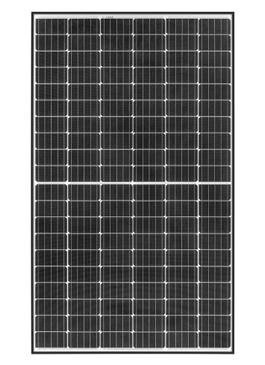
Half-cell modules have solar cells that are cut in half, which improves the module’s performance and durability. Traditional 60- and 72-cell panels will have 120 and 144 half-cut cells, respectively. When solar cells are halved, their current is also halved, so resistive losses are lowered and the cells can produce a little more power. Smaller cells experience reduced mechanical stresses, so there is a decreased opportunity for cracking. Half-cell modules have higher output ratings and are more reliable than traditional panels.
“When considering a solar installation, the idea of ‘more’ is at the forefront produce more energy, save (or earn) more money and do more good for the environment,” said Cemil Seber, VP of global marketing and product management for module manufacturer REC. “In the case of rooftops where there is a limited amount of space available, using solar panels with half-cut cell technology can help.
N-Type Solar Panels
N-type solar panels are a type of photovoltaic technology that uses N-type silicon as the base material for solar cells, as opposed to P-type silicon, which is more common in the industry. N-type solar cells are designed to enhance efficiency and longevity by reducing certain limitations inherent in P-type cells.
Key Features of N-Type Solar Panels
1. Material Composition
N-type cells are doped with phosphorus, creating an excess of electrons (negative charge carriers).
This contrasts with P-type cells, which are doped with boron to create positive charge carriers.
2. Higher Efficiency.
N-type solar cells generally achieve higher efficiencies due to reduced susceptibility to light-induced degradation (LID) and other performance-degrading factors.
3. Reduced Light-Induced Degradation (LID).
P-type cells often suffer from LID caused by the interaction of boron and oxygen.
N-type cells avoid this problem, maintaining stable performance over time.
4. Temperature Coefficient
N-type panels typically have better performance at high temperatures compared to P-type panels, resulting in improved energy yield in hot climates.
5. Longevity.
These panels usually have longer warranties (often up to 30 years) because they are less prone to degradation and maintain a higher performance level over time.
6. Bifacial Capabilities.
Many N-type solar cells are used in bifacial panels, which generate power from both sides, increasing overall energy output.
7. Higher Initial Cost
N-type solar panels are generally more expensive than P-type panels due to the more advanced manufacturing process and higher efficiency levels.
Examples of N-Type Solar Panel Technologies
Heterojunction Technology (HJT): Combines N-type crystalline silicon with thin amorphous silicon layers for even higher efficiency.
IBC (Interdigitated Back Contact) Cells:Utilizes N-type silicon with all electrical contacts on the rear, improving light absorption.
Get a Quote
Ready to switch to clean, reliable energy? Request your personalized quote today and discover cost-effective solar solutions designed for your needs. Our experts will guide you through every step, from assessment to installation, ensuring maximum savings and long-term performance.